·
4 min read
Golf Performance Training: How Strength Work Translates to Lower Scores
David Spitdowski

Golf Performance Training: How Strength Work Translates to Lower Scores
Golf is not typically thought of as a strength sport. Most golfers do not train like athletes. And that is exactly why the ones who do have a significant competitive advantage over the ones who do not.
The research on golf performance is clear. Clubhead speed, rotational power, and physical durability are all trainable. They respond to progressive strength and conditioning work the same way they do in any other athletic discipline. And every one of those physical qualities translates directly to performance on the course.
Here is how a properly designed golf performance training program works and what you can expect from it.
Why Golfers Need Strength Training
The modern golf swing generates tremendous force through the body in a fraction of a second. At the top levels of the game, elite players are producing peak forces that require exceptional hip strength, rotational power, core stability, and shoulder integrity.
Most recreational and competitive amateur golfers are leaving significant distance and consistency on the table not because of a technical flaw in their swing but because their body cannot physically produce or control the forces that better swing mechanics would require.
A golfer with weak glutes and poor hip mobility cannot rotate efficiently through the hips in the downswing regardless of what their instructor tells them. Strength training addresses the physical limitations that technique coaching alone cannot fix.
The Physical Qualities That Drive Golf Performance
Clubhead speed is the primary driver of distance. Clubhead speed is primarily determined by the rate at which you can produce and transfer rotational force through the kinematic chain of the swing.
Hip strength and mobility are foundational. The ability to load the trail hip in the backswing and drive powerfully through the lead hip in the downswing requires glute strength, hip flexor flexibility, and rotational stability that most golfers have not specifically trained.
Rotational core strength is what transfers force from the lower body to the upper body. Not crunches and sit-ups. Anti-rotation stability, rotational power under load, and the ability to create separation between hip rotation and shoulder rotation are what matter for golf performance.
Shoulder stability and scapular control protect the shoulder through the enormous range of motion and force demands of the swing while also supporting the arm and club acceleration that produces speed.
Single leg stability and balance underlie every aspect of the swing. The transition from backswing to downswing is essentially a single leg loading pattern. Training it directly produces improvements that show up immediately in swing consistency.
What a Golf Performance Program Looks Like
A well-designed golf performance program looks different from a generic strength training program. The exercise selection is specific to the physical demands of the golf swing.
Mobility work for the hips and thoracic spine is integrated throughout. Not as a warm-up afterthought but as a genuine training priority that gets progressively loaded and measured.
Hip dominant strength work including deadlift variations, hip thrusts, and single leg patterns builds the posterior chain power that drives the downswing.
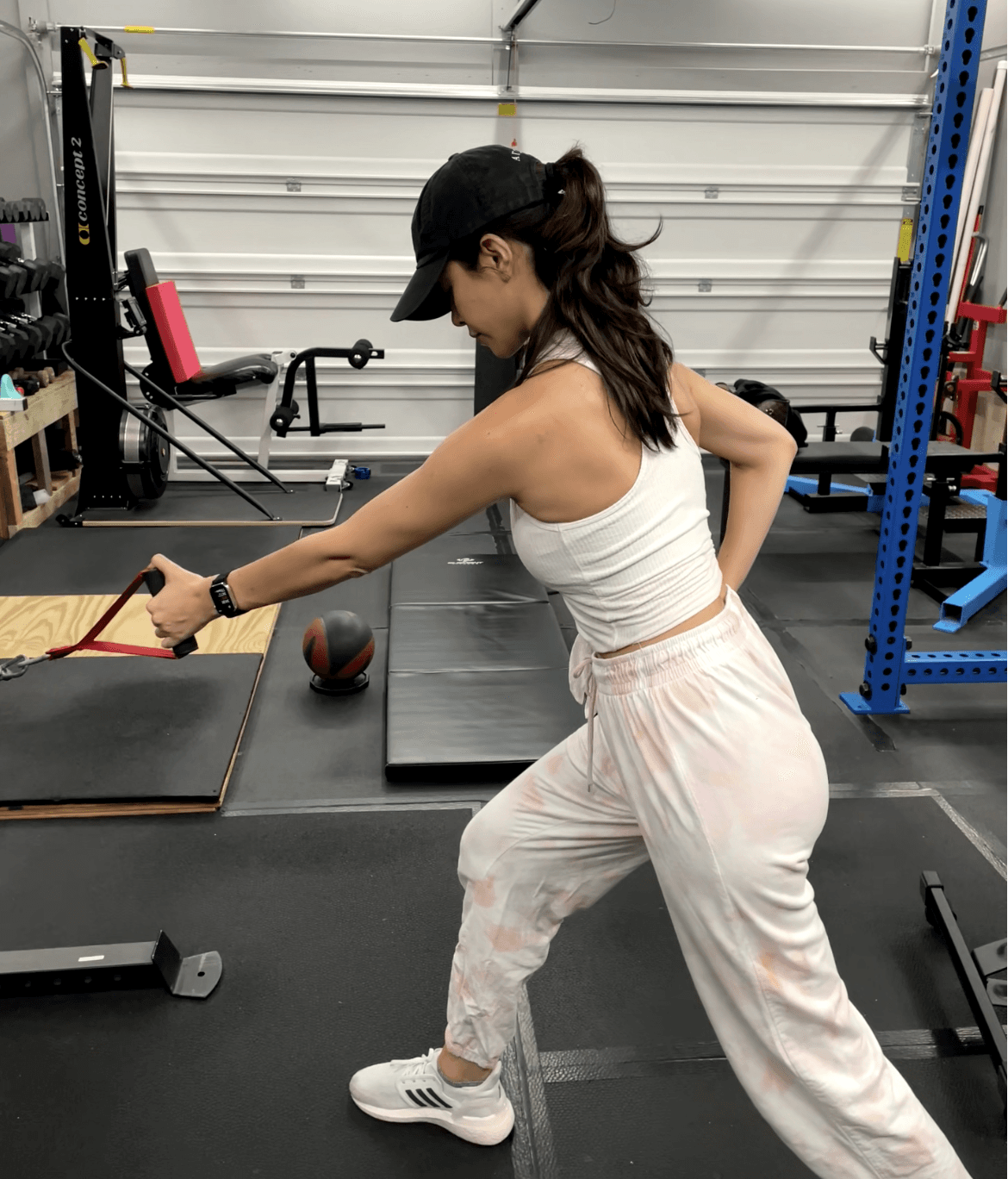
Anti-rotation and rotational core work trains the exact quality that transfers force through the swing.
Upper body pulling and shoulder stability work protects the shoulder and supports the arm speed needed for clubhead velocity.
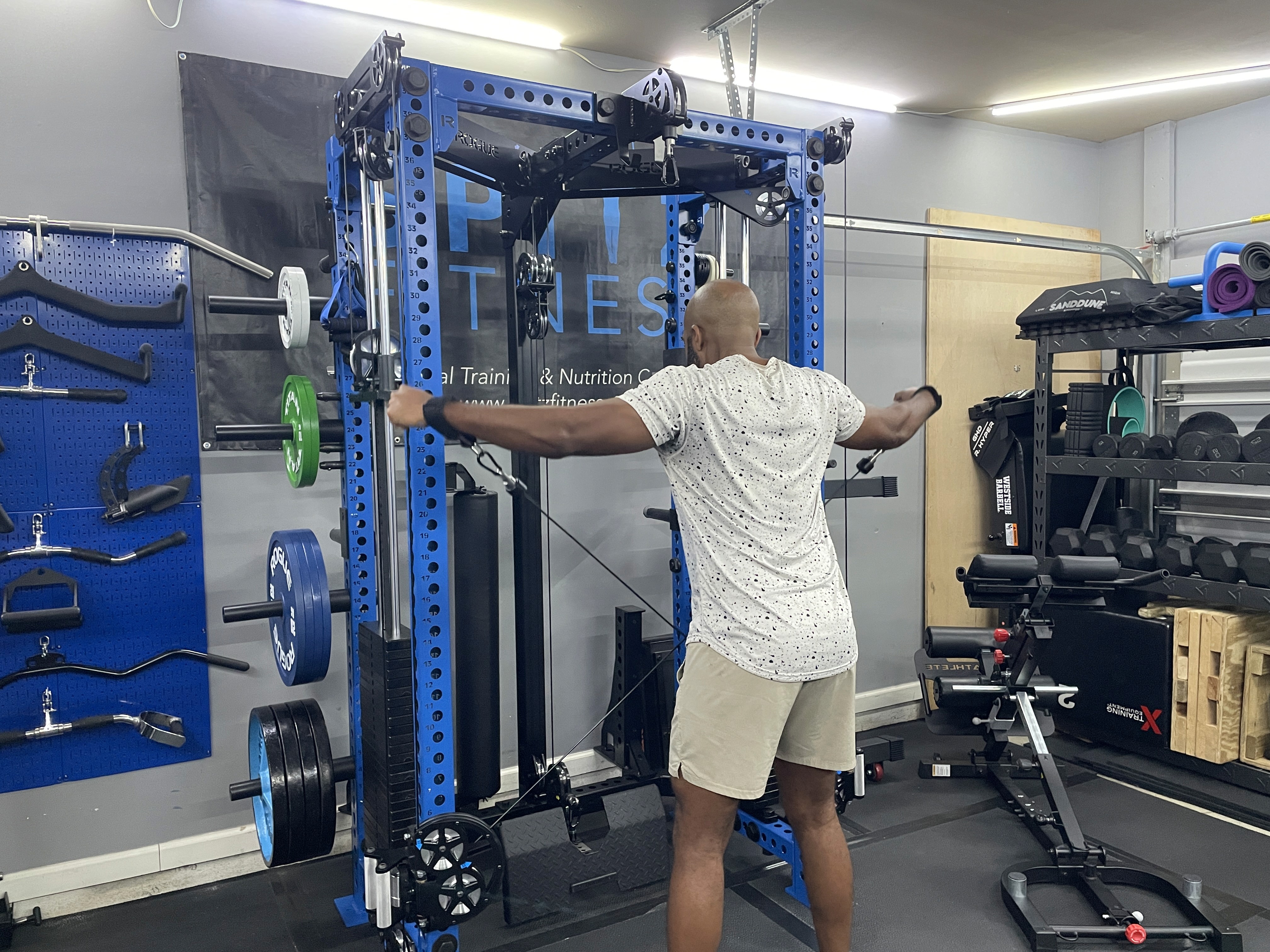
Power development through medicine ball rotational throws, cable rotations, and plyometric hip extension trains the rate of force production that directly drives swing speed.
The Injury Reduction Benefit
Lower back pain is the most common injury in golfers at every level. It is followed closely by shoulder problems, elbow issues, and hip pain. The majority of these injuries are the predictable result of repeatedly applying force through a body that lacks the strength and stability to handle it safely.
A properly designed strength training program does not just improve performance. It builds the structural resilience that lets you play more golf with less pain and fewer forced breaks from the game.
Who This Program Is For
The Spitz Fitness golf performance program is designed for serious amateur golfers and competitive players who want to maximize their physical potential for the game. If you play regularly, have a specific handicap goal, compete at any level, or simply want more distance and consistency without changing equipment, this program is built for you.
You do not need to be an elite athlete to benefit. Most recreational golfers have significant untapped physical potential that has never been trained. The adaptation that comes from a structured golf-specific program is often faster and more dramatic than these athletes expect.
If you are in Atlanta and serious about your game, reach out to learn more about the Spitz Fitness golf performance program.
Frequently Asked Questions
Does strength training increase golf swing speed?
Yes. Clubhead speed is primarily determined by how fast you can produce and transfer rotational force through your body. That quality is trainable through progressive strength and power work for the hips, core, and posterior chain, just like in any other sport.
What gym exercises improve golf performance?
Hip-dominant strength work like deadlift variations and hip thrusts, single-leg stability exercises, anti-rotation and rotational core training, shoulder stability work, and rotational power development like medicine-ball throws.
Can strength training reduce golf injuries?
Yes. Lower back pain, the most common golf injury at every level, usually results from repeatedly applying swing forces through a body that lacks the strength and stability to handle them. A structured program builds that resilience so you can play more golf with less pain.